
Finance Capsules
13 capsules

Remote Salary Math: Taxes, Nexus, and Cost of Living
Earning a high remote salary from a big city while living in a low-cost area can backfire due to hidden tax and lifestyle traps. These traps differ on how state and local taxes apply to remote work, including unexpected tax obligations from employer nexus and complex rules like New York’s convenience of the employer. Understanding these differences helps you avoid overpaying taxes and misjudging your true spending power.

Navigating New York City Co-ops, Condos, and Rental Regulations
You will learn how to manage eviction notices with specific deadlines like the 14-day pay-or-quit for nonpayment and understand tenant protections under laws such as the Good Cause Eviction statute. The guide clarifies co-op board approval processes, including penalties like a $1,000 fine for delayed decisions, and details real estate transfer tax obligations, including a 15-day deadline for payment and a 10% penalty plus monthly interest for late filings. It also covers the elimination of vacancy bonuses, security deposit rules, and property tax penalties, equipping you to navigate the complex legal and financial landscape of NYC housing.

Austin Housing After the Boom: Costs, Taxes, and Tradeoffs
Austin’s housing market shifted dramatically after a pandemic-driven surge and a sharp price correction, challenging the assumption that buying is always the smarter choice. Key factors like property tax rules, special district fees, and local market comps reveal different financial impacts on buyers versus renters. Understanding these factors helps you weigh affordability, tax benefits, and long-term costs to decide what truly fits your situation.

Irvine Housing Math: The Case for Renting Over Owning
In Irvine, California, home prices rarely crash but owning a home typically costs thousands more per month than renting, challenging the usual math that buying always makes financial sense. Unlike common assumptions, selling a home doesn’t eliminate housing costs, and buyers face risks like rising interest rates, higher property taxes after reassessment, and costly repairs. Recognizing these realities helps avoid overpaying and losing mobility in a market where prices soften but don’t freefall.

Meet Texas Property Tax and Cost Deadlines
You will work through the critical deadlines and requirements for Texas property ownership, including filing a Notice of Protest by May 15 or within 30 days of receiving your appraisal notice. You will understand how to handle move-in compliance costs, manage contract district charges such as MUD and PID fees that can add thousands annually, and secure weather insurance before storms. By the end, you will be ready to meet all four key clocks that protect your legal rights and control your expenses in Texas property ownership.

A Denver Homebuyer's Guide to Wildfire Risk and Renting
Deciding whether to buy or rent in Denver hinges on factors like wildfire risk, insurance costs, and homeowners association responsibilities. Wildfire-prone areas can drive insurance rates up dramatically and require costly mitigation efforts, while HOA fees and maintenance obligations add to homeownership expenses. Understanding these factors helps you weigh monthly costs and risks to choose the best option for your lifestyle and budget.

A Founder's Guide to Choosing LLC, S-Corp, or C-Corp
Your choice of LLC, S-Corp, or C-Corp shapes your tax bill, paperwork burden, and eventual exit for years. The options split between simplicity-first thinking, where an LLC fits most small businesses, and growth-first thinking, where C-Corp advantages and S-Corp salary rules pay off at scale. Match the trade-offs to your profit level and plans before you file.

The Executor's Guide to Estate Debts and Personal Liability
Being an executor means handling estate debts and taxes before giving out assets to heirs. Many fail to prioritize creditor claims or meet deadlines, exposing themselves to personal liability. Following strict probate rules and acting as a loyal fiduciary protects executors from costly lawsuits and financial loss.

Compare Renting and Buying by Calculating True Costs and Opportunity
Deciding whether to rent or buy requires accounting for all ownership costs—mortgage interest, property taxes, insurance, maintenance, and transaction fees—plus the opportunity cost of capital tied up in a home. By including these factors and comparing them to potential investment returns, such as a 7% to 10% annual gain from stock index funds, you can accurately assess when buying builds wealth and when renting plus investing may lead to greater financial independence. This approach enables you to run personalized calculations before committing to a home purchase.

The Road to Wealth with Rental Assets: The Benefits and the Hidden Downside
Rental assets can build wealth through cash flow, equity growth, leverage, and tax advantages, but they also demand capital, discipline, and active risk management. Readers will learn how rental property income works, why it can accelerate long-term wealth, and where hidden costs, vacancies, debt pressure, maintenance, and market shifts can undermine returns.

Get Approval for California Proposition 19 Property Tax Exclusions
You will prepare a complete and compliant filing for California Proposition 19 property tax exclusions by assembling required documentation, correctly calculating inherited property basis using fair market value or estate tax return values, and proving qualifying family relationships with signed certifications under penalty of perjury. You will rehearse meeting strict deadlines and structuring ownership—especially with LLCs—to avoid reassessment triggers. By working through these steps in order, you will finish ready to submit an airtight claim that satisfies all county assessor requirements under the 2024 rules.
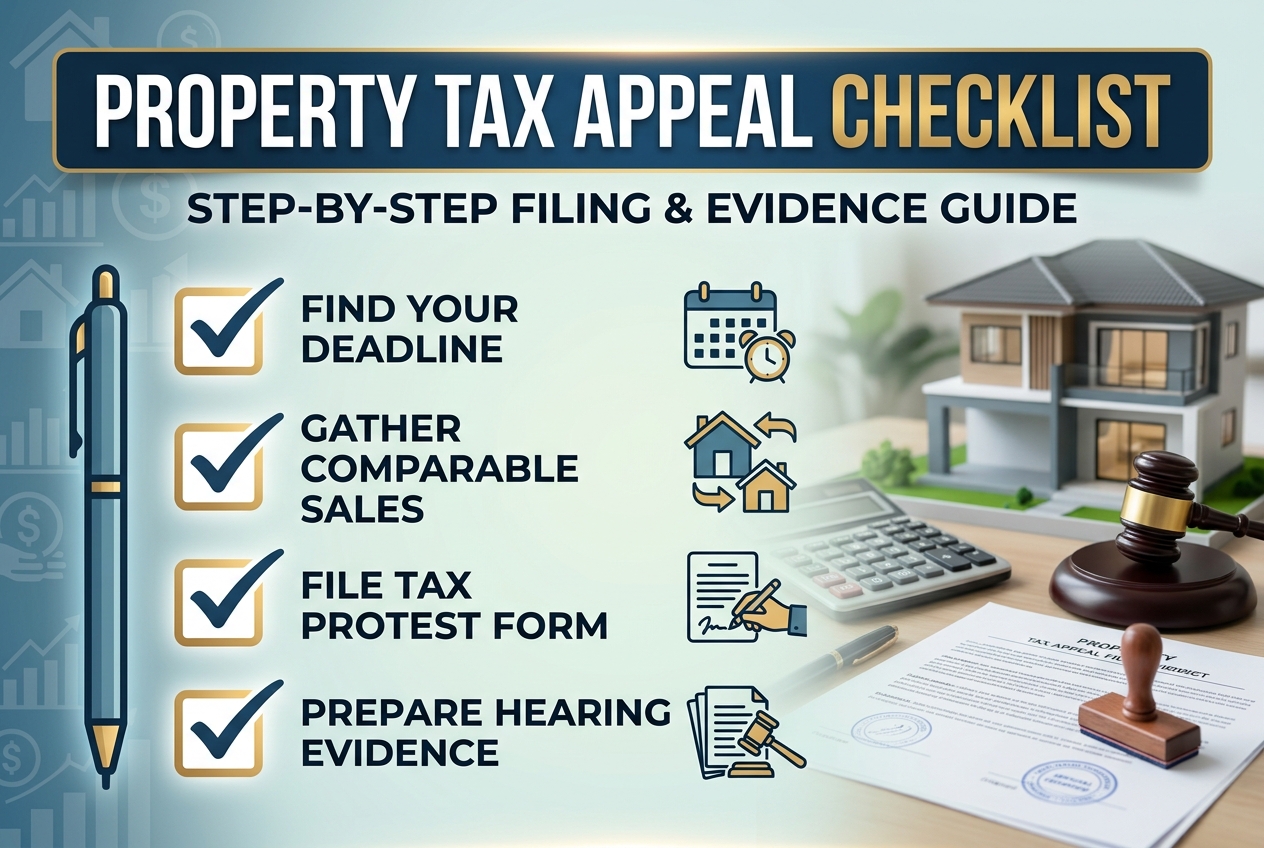
Property Tax Appeal Filing and Evidence Checklist
Property tax appeals require strict adherence to filing deadlines and the submission of compelling evidence to challenge an assessment effectively. You will work through identifying your exact deadline, assembling comparable sales data, filing your protest correctly, and preparing for the hearing. By the end, you will be ready to present a complete appeal that meets all procedural requirements and maximizes your chances of reducing your property tax.