
Guide de l'acheteur immobilier à Denver sur le risque d'incendie de forêt et la location
De sources originales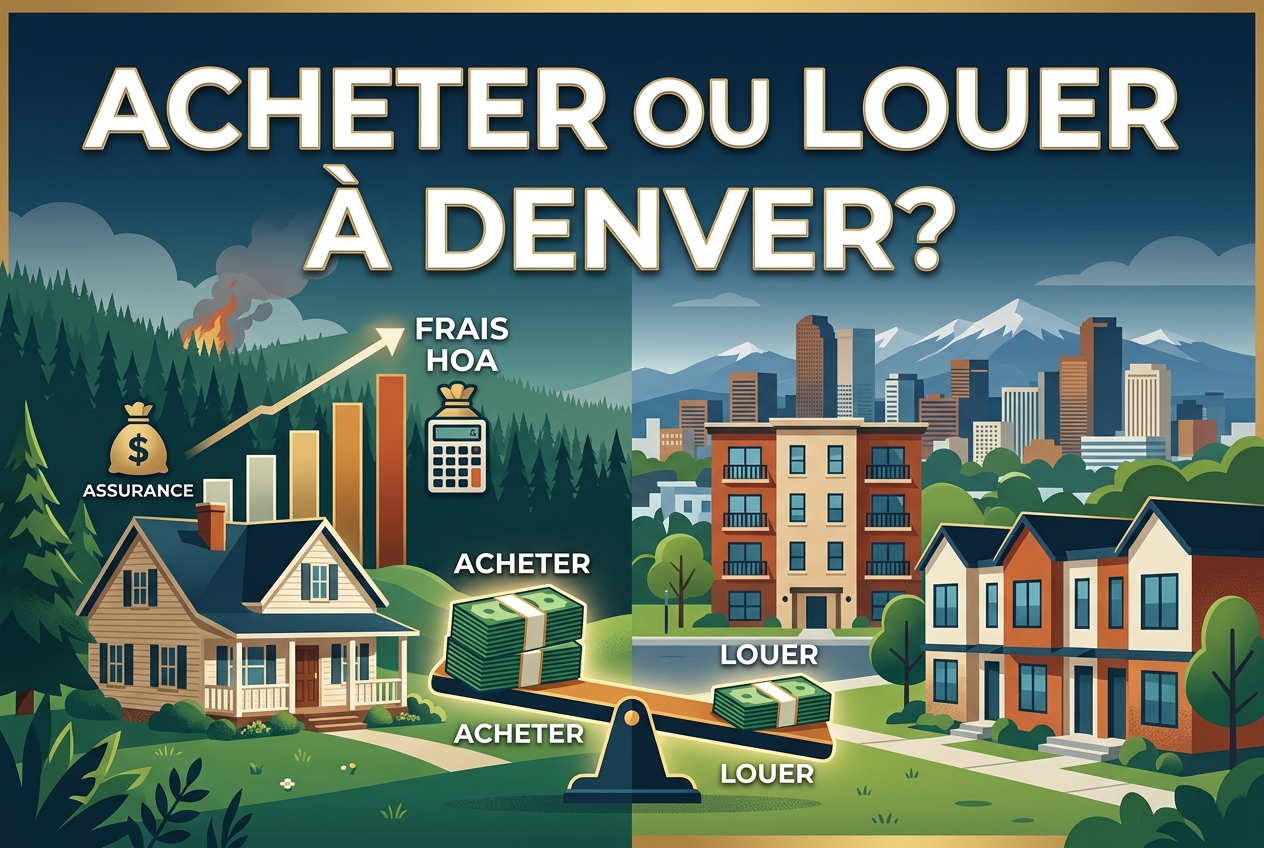
À propos de cette capsule
La décision d'acheter ou de louer à Denver dépend de facteurs tels que le risque d'incendie de forêt, le coût de l'assurance et les responsabilités liées aux associations de propriétaires. Les zones sujettes aux incendies peuvent faire grimper considérablement les primes d'assurance et nécessiter des mesures de mitigation coûteuses, tandis que les frais de copropriété et les obligations d'entretien augmentent les dépenses liées à la propriété. Comprendre ces éléments vous aide à évaluer les coûts mensuels et les risques pour choisir l'option la mieux adaptée à votre mode de vie et à votre budget.
3 facteurs clés pour acheter ou louer
Facteurs de propriété à Denver pour achat vs location
Essayez de demander : « Quel changement dans les transports à Denver peut augmenter les valeurs tout en risquant le déplacement ? »
Conseils de voyage économique pour explorateurs avisés
Les incitations échouent quand le temps est une friction.
IA générique vs IA avec cette capsule
Aperçu“Quelles surprises liées à l'assurance doit-on anticiper lorsqu'on achète une maison dans les zones sujettes aux incendies de forêt à Denver ?”
IA générique
“Quelqu'un qui achète dans les zones sujettes aux incendies des contreforts et interfaces urbaines de Denver — Golden, Genesee, Morrison, Evergreen, Conifer, comtés de Jefferson/Douglas/Boulder, etc. — doit s'attendre à ce que l'assurance soit un enjeu plus important que dans un achat immobilier classique.
Principales surprises :
-
Vous pourriez ne pas pouvoir obtenir facilement une police habitation standard
- Certains assureurs refusent des maisons basées sur la modélisation du risque incendie, même si la maison semble bien entretenue.
- La distance à une caserne/défense incendie, les routes étroites, le terrain escarpé, la densité des arbres, le type de toit et l'accès à l'évacuation comptent tous.
-
Les devis peuvent changer après inspection
- Un assureur peut d'abord proposer une couverture, puis inspecter par satellite, drone, inspection extérieure ou logiciel ...”
Cette capsule
“La première surprise est que le « problème d'assurance » ne se limite pas au prix — il peut s'agir aussi de la disponibilité. Dans les contreforts et communautés adjacentes aux montagnes de la région de Denver, les propriétaires ont signalé des augmentations de primes de 50 % à 100 %, et dans les zones à haut risque d'incendie, des hausses de 150 % à 300 % sont courantes. Certaines propriétés dans le comté de Boulder, le comté d'El Paso et le long du corridor I-70 ont des primes annuelles dépassant 8 000 à 10 000 $. Certains assureurs peuvent même refuser de souscrire ou de renouveler la police si la maison est entourée de forêt, située sur une pente, difficile d'accès en cas d'incendie, ou classée en « risque extrême ».
Voici les surprises d'assurance à prévoir :
1. Votre prêteur peut s'en soucier avant vous
Si vous avez un prêt hypothécaire, une assurance habitation active est g...”
Guide de l'acheteur immobilier à Denver sur le risque d'incendie de forêt et la location
Capxule Finance
Voir le profil
Similaires dans Finance

Guide de l’héritier pour finaliser la vente d’une maison héritée
Hériter d’une maison ne signifie pas que vous pouvez la vendre immédiatement. Les obstacles juridiques locaux comme la succession, les recherches de titre et la levée des privilèges créent des pièges spécifiques qui peuvent retarder ou bloquer la vente. Comprendre si vous êtes bloqué par une approbation judiciaire, embrouillé dans des litiges de propriété ou confronté à des dettes cachées vous aide à choisir la bonne voie pour faciliter une vente fluide.

Guide pour les enfants adultes sur les soins et les finances des parents âgés
Discuter d'argent et de soins avec des parents vieillissants avant une crise permet d'éviter confusion et conflits par la suite. Les étapes diffèrent selon la manière d'organiser les documents importants, de poser des limites éthiques et de se préparer légalement et financièrement aux besoins futurs. Vous apprendrez comment rassembler et sécuriser les informations essentielles, planifier les coûts des soins à long terme et garantir un accès fluide aux comptes et aux décisions le moment venu.

Le guide du propriétaire automobile pour contester les indemnisations d'assurance
Les propriétaires de voitures confrontés à un règlement pour perte totale doivent comprendre comment les assureurs calculent la valeur réelle au comptant, la dépréciation et les prix des véhicules comparables. Apprenez à contester les offres de règlement basses grâce aux clauses d'expertise, aux évaluations indépendantes, aux contre-offres, à la documentation et aux règles spécifiques à chaque État afin de pouvoir obtenir un règlement plus équitable en toute confiance.

Le guide du conducteur sur les coûts d'achat et de location de voiture
Une voiture est l'un des plus gros chèques que vous écrirez jamais, et le prix affiché ne vous dit presque rien sur ce qu'elle coûte réellement. Ces analyses diffèrent selon ce qui influence le total : certaines suivent le coût par mile et les frais de retour de location, d'autres évaluent le risque d'entretien, la valeur de revente ou comment traduire les taux de location en une comparaison équitable avec l'achat. Adaptez les chiffres à vos propres habitudes de conduite et à votre budget, et vous pourrez choisir l'option qui vous fait vraiment économiser de l'argent.