
Alternatives à la redoublement : soutien à la littératie, tutorat et suivi des progrès
De sources originales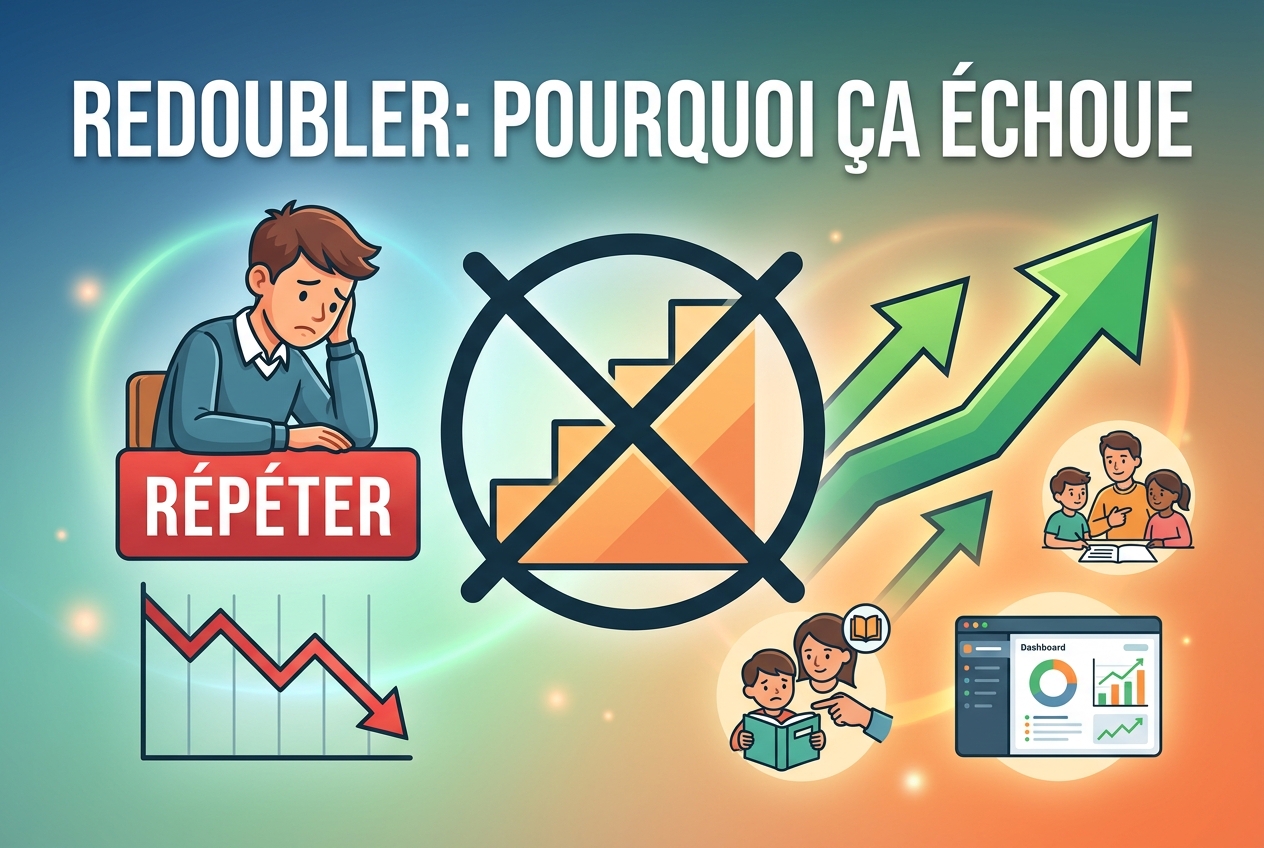
À propos de cette capsule
Redoubler une classe semble offrir une seconde chance, mais les preuves montrent que cela aggrave souvent la situation. Ces interventions proposent ce qui fonctionne réellement : une aide précoce en littératie, du tutorat et un suivi des progrès qui détecte les difficultés avant que le redoublement ne soit envisagé. Elles diffèrent par le moment et la méthode, et expliquent ensemble pourquoi les politiques strictes de redoublement se retournent souvent contre elles.
5 interventions clés sur les effets du redoublement
Effet causal via un dispositif de discontinuité de régression
Essayez de demander : « À quels élèves l'estimation causale du redoublement s'applique-t-elle réellement ? »
Intervention précoce en littératie plutôt que redoublement.
Essayez de demander : « Que doivent faire les écoles avant de redoubler un jeune lecteur en difficulté ? »
Le redoublement se retourne contre les élèves ; privilégier l'aide précoce.
Les interventions basées sur les données réduisent le besoin de redoublement.
Pourquoi les politiques strictes de redoublement échouent
IA générique vs IA avec cette capsule
Aperçu“Lorsqu'un district scolaire met en place une politique stricte de non-passage social liée aux résultats des tests standardisés, cela aide-t-il vraiment les élèves qu'elle est censée servir ?”
IA générique
“Habituellement, pas à elle seule. Une politique stricte de « non-passage social » liée principalement aux résultats des tests standardisés produit souvent des gains à court terme aux tests mais n'améliore pas fiablement les résultats à long terme des élèves qu'elle est censée aider — et peut en nuire à certains.
Points clés issus de la recherche :
-
Le redoublement seul est une intervention faible. Retenir un élève sans changer l'enseignement ou les soutiens signifie souvent que l'élève répète le même contenu de la même manière, ce qui ne traite pas le problème d'apprentissage sous-jacent.
-
Les gains à court terme peuvent être trompeurs. Les élèves redoublants peuvent obtenir de meilleurs scores l'année suivante en partie parce qu'ils sont plus âgés et ont eu une année supplémentaire d'exposition. Certaines études trouvent des gains précoces, surtout en lecture, m...”
Cette capsule
“Habituellement, non. Le schéma caché est que les politiques strictes de non-passage social remportent souvent la conférence de presse mais perdent l'élève. Les districts annoncent des normes sévères, lient la promotion aux résultats des tests, puis assouplissent la politique, abaissent les seuils ou créent des exemptions parce que les réactions négatives, les inégalités et les coûts deviennent inévitables.
Les élèves que ces politiques sont censées aider peuvent montrer une amélioration à court terme, surtout quand le redoublement a lieu en début de scolarité et que le test est étroitement aligné sur le programme répété. Mais ces gains s'estompent généralement. Les élèves redoublants finissent souvent avec des niveaux de réussite égaux ou inférieurs plus tard, tout en portant des risques supplémentaires : honte, aliénation scolaire, faible estime de soi, plus d'absences, problèmes de co...”
Alternatives à la redoublement : soutien à la littératie, tutorat et suivi des progrès
Capxule Education
Voir le profil
Similaires dans Éducation

Pass the New Jersey Driver License Knowledge Test
An AI study companion built from the official New Jersey Driver Manual. Learn New Jersey speed limits, GDL rules, point values, and signs, then practice with explained questions for the MVC knowledge test.
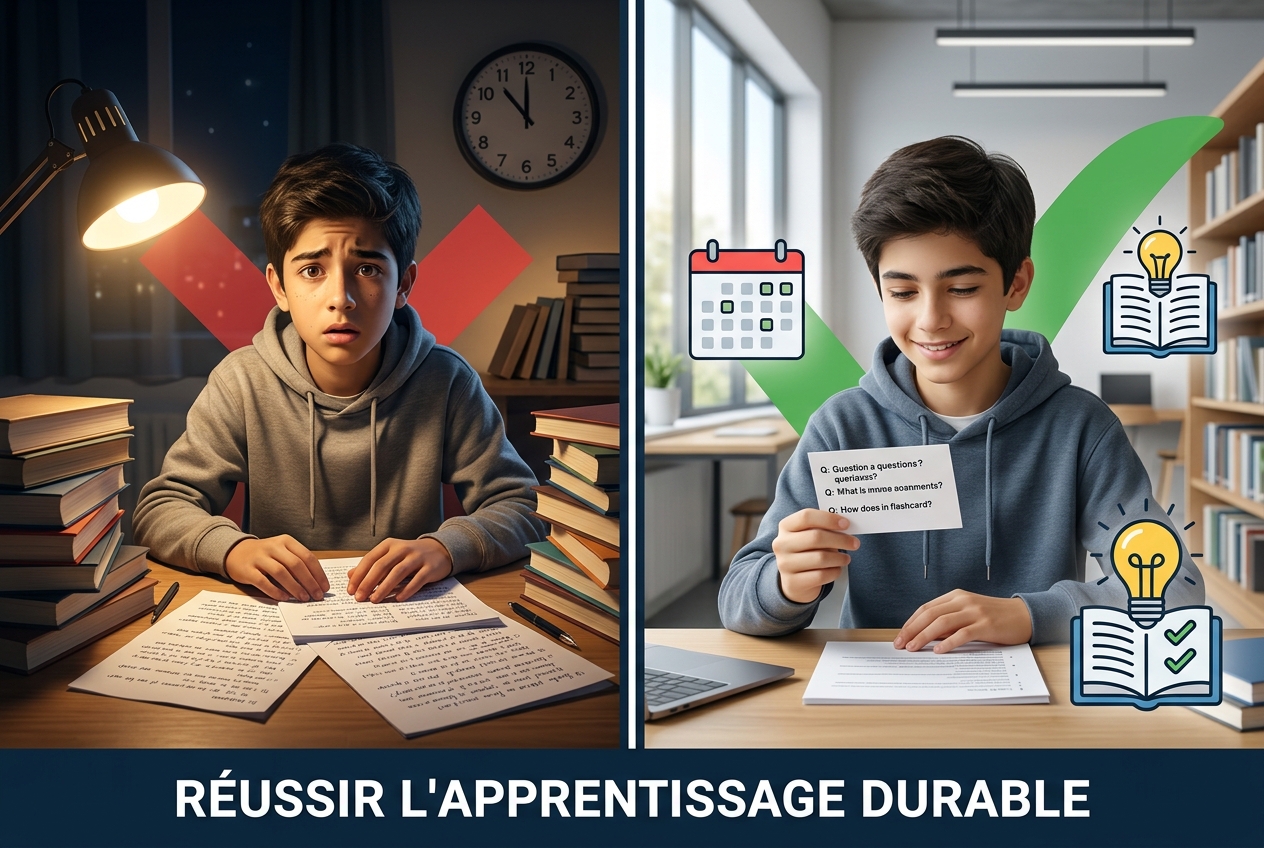
Guide de l’éducateur sur la pratique espacée et la pratique de récupération
Beaucoup de ce que les écoles et les parents supposent sur l’apprentissage, y compris les styles d’apprentissage, ne résiste pas à l’épreuve des faits. Ces stratégies se concentrent sur ce qui fonctionne réellement : espacer la pratique dans le temps, rappeler le matériel plutôt que de le relire, et des conceptions de leçons appuyées par des expériences. Les comparer montre où concentrer les efforts pour que les enfants se souviennent vraiment de ce qu’ils apprennent.

Apprentissage des langues à l'âge adulte : périodes critiques, plasticité cérébrale et enseignement
L'apprentissage des langues à l'âge adulte se situe à l'intersection des recherches sur les périodes critiques, la plasticité cérébrale et la pratique en classe. Cette synthèse explique ce que les neurosciences suggèrent sur les avantages et limites liés à l'âge, comment les adultes peuvent encore développer de solides compétences linguistiques, et comment l'enseignement peut s'adapter aux enfants comme aux apprenants adultes.

Obtenez Plus de Soutien Financier Avant l'Inscription
Vous apprendrez comment demander efficacement une révision de votre offre d'aide financière en identifiant des circonstances particulières telles qu'une perte d'emploi ou des frais médicaux non pris en compte dans votre FAFSA. Vous serez guidé dans la rédaction d'une lettre d'appel claire et bien documentée qui explique votre situation financière modifiée et inclut des chiffres précis ainsi que des preuves à l'appui. À la fin, vous serez prêt à soumettre un appel convaincant qui augmentera vos chances d'obtenir une aide supplémentaire avant les dates limites d'inscription.