
Mastering Safe Home Canning Through Four Critical Adjustments
About this Capsule
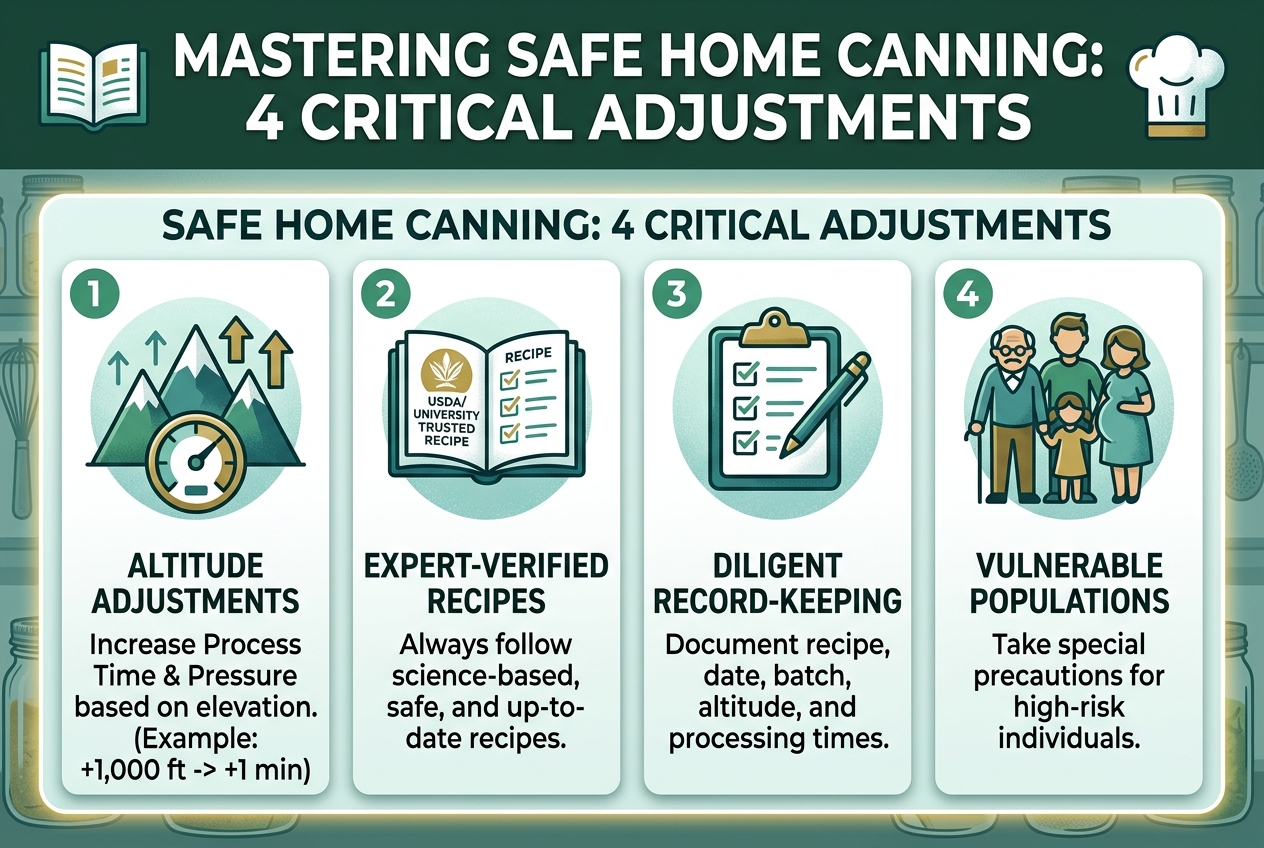
Safe home canning requires mastering four distinct adjustments that together ensure food safety: altitude-based process time and pressure modifications, expert-verified recipe use, diligent record-keeping, and special precautions for vulnerable populations. For example, at elevations above 1,000 feet, boiling times must increase by one minute per additional 1,000 feet to compensate for lower boiling temperatures, preventing spoilage and bacterial risk. Understanding and integrating these adjustments enables confident, reliable food preservation tailored to your environment and needs.
4 safe home canning adjustments explained
Use the guide, then verify with experts.
Record-keeping and verification for food safety
Try asking: “What should be kept on file for canning safety verification?”
Altitude adjustments for safe canning.
Protect vulnerable groups from food risks.
Mastering Safe Home Canning Through Four Critical Adjustments
Capxule Food & Cuisine
View profile
Related in Food

Authentic Extra-Virgin Olive Oil: Buying, Tasting, and Storing It Well
Much of the extra-virgin olive oil on store shelves is not what the label promises, and the genuine article announces itself with bitterness and a peppery sting. These tips differ on how to catch a fake: some rely on taste and that throat-catching bite, others on harvest dates and traceability, and others on storage habits that keep a real bottle from going stale. You'll be able to buy an authentic oil with confidence and keep it fresh at home.

MSG Panic: Science, Bias, and Food Safety
A single 1968 letter to a medical journal helped launch fifty years of fear about MSG. The views clash over whether the panic was a baseless mistake, a product of anti-Asian bias, or a warning about real health risks that science has yet to close. Trace how the scare spread and decide for yourself what belongs in your food.

BBQ Chemistry Essentials: Heat, Bark, Smoke, and Safety
Tender brisket and ribs come down to chemistry: collagen breaking down at the right temperature, pH steering the bark, and partial combustion painting the smoke ring. The factors cover heat management, membrane removal, and the safety rules that keep long, low cooks from going wrong. Understand the reactions and you can steer them instead of hoping.

A Home Brewer's Guide to Coffee Water: Minerals, Hardness, and pH
Coffee water shapes extraction, flavor clarity, and equipment longevity through its minerals, hardness, and pH. Learn how purification, remineralization, scale control, and acidity interact so you can test your tap water and choose the right adjustment for better home brewing.