
Guide du cuisinier pour les pâtes de curry au mortier et au mixeur
De sources originales
À propos de cette capsule
L'outil que vous utilisez modifie la pâte : le pilonnage à la main libère des arômes qu'aucune vitesse de mixeur ne peut égaler, mais le mixeur l'emporte sur la praticité en semaine. Ces méthodes se distinguent par le pilonnage versus le mixage, le frais versus l'acheté en magasin, l'ordre exact des ingrédients versus l'assaisonnement au goût, et la conservation au réfrigérateur brièvement ou la congélation en petites portions. Votre choix dépendra de l'authenticité désirée par minute d'effort.
5 approches clés pour préparer la pâte de curry thaï
Mortier vs mixeur, pâte de curry fraîche vs achetée.
Techniques pour pâte de curry maison
Bien conserver la pâte de curry
La bonne technique est clé pour le curry.
Personnaliser la pâte de curry selon les besoins.
IA générique vs IA avec cette capsule
Aperçu“Si je n'ai que 20 minutes et pas de mortier, dois-je utiliser un mixeur ou simplement acheter de la pâte de curry ?”
IA générique
“Avec seulement 20 minutes, achetez de la pâte de curry achetée si vous voulez le résultat le plus fiable et sans stress.
Cela dit, un mixeur est tout à fait acceptable si vous avez déjà les ingrédients et souhaitez un goût plus frais — surtout pour les pâtes de curry de style thaï. Utilisez un petit mixeur/robot si possible, et ajoutez un peu d'huile neutre, de lait de coco ou d'eau pour faciliter le mixage. Ce sera peut-être un peu plus lisse/fluide que la pâte pilée, mais ça marche.
Meilleure option rapide : utilisez de la pâte achetée et « améliorez-la ». Faites-la revenir dans l'huile une à deux minutes, puis ajoutez quelques aromates frais si vous en avez, comme :
- Ail
- Gingembre ou galanga
- Citronnelle
- Piment
- Zeste ou feuilles de citron vert
- Tiges de coriandre
- Sauce de poisson ou sauce soja
- Une pincée de sucre
Donc : **pour la rapidité, pâte achetée. Po...”
Cette capsule
“Utilisez de la pâte de curry achetée pour un repas en 20 minutes — mais considérez-la comme un concentré puissant, pas un curry complet.
Le raccourci ne fonctionne que si vous faites trois choses :
- Choisissez la bonne pâte : la liste d'ingrédients doit être surtout herbes, épices, sel et pâte de crevettes — évitez les pâtes avec huiles, additifs ou eau si possible. Vérifiez aussi la présence de crustacés, gluten, ail, échalotes ou autres allergènes.
- Utilisez moins de pâte fraîche : la pâte achetée est plus concentrée. Un bon point de départ est environ 50 g / 3 cuillères à soupe de Mae Ploy pour 2–3 portions.
- Allez-y doucement avec la sauce de poisson : surtout avec Mae Ploy, qui a tendance à être salée. Ajoutez la sauce de poisson à la fin, prudemment, après dégustation.
L'erreur cachée : beaucoup versent la pâte achetée directement dans l...”
Guide du cuisinier pour les pâtes de curry au mortier et au mixeur
Capxule Food & Cuisine
Voir le profil
Similaires dans Alimentation
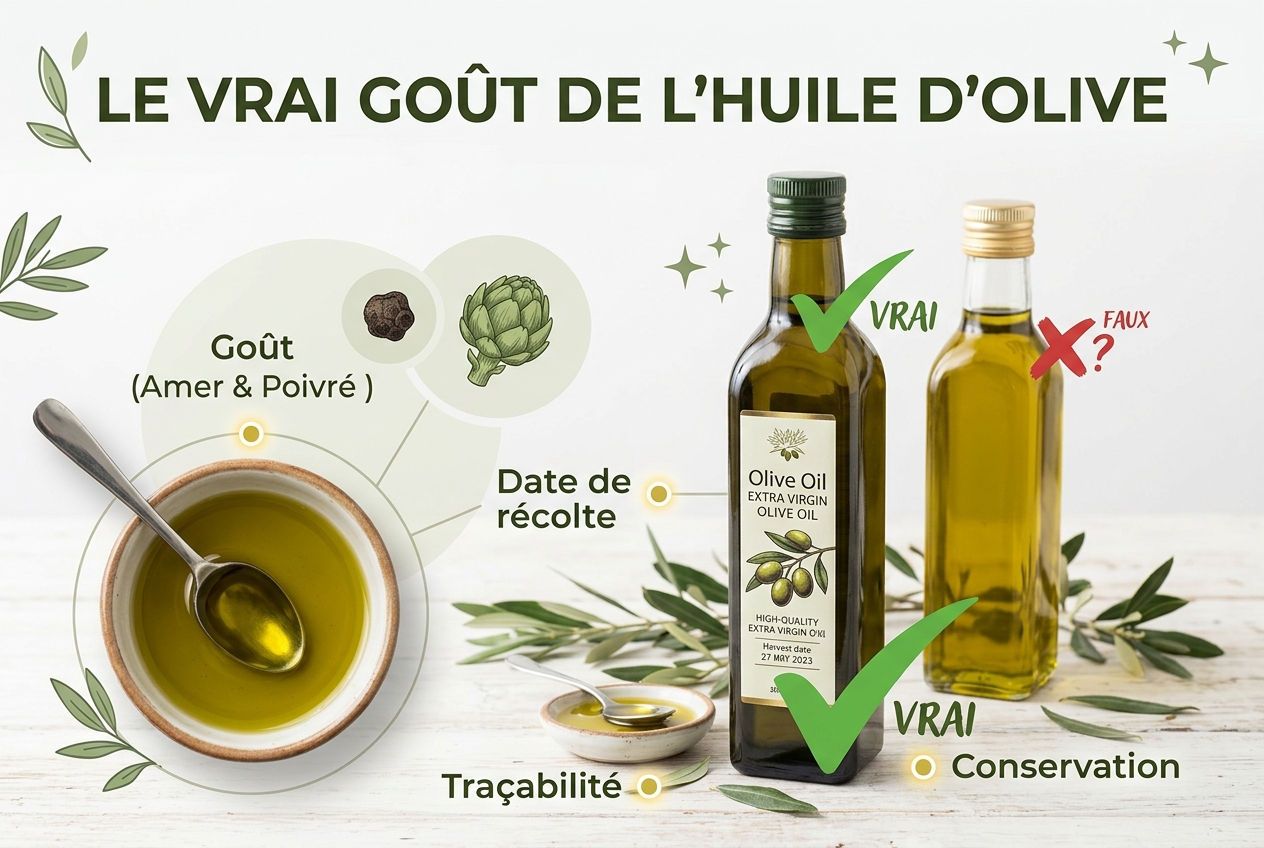
Huile d'olive extra vierge authentique : bien l'acheter, la déguster et la conserver
Une grande partie de l'huile d'olive extra vierge en rayon ne correspond pas à ce que promet l'étiquette, et le véritable produit se reconnaît à son amertume et à sa piqûre poivrée. Ces conseils diffèrent selon la manière de démasquer une contrefaçon : certains reposent sur le goût et cette sensation qui chatouille la gorge, d'autres sur les dates de récolte et la traçabilité, et d'autres encore sur les habitudes de conservation qui empêchent une vraie bouteille de devenir rance. Vous saurez ainsi acheter une huile authentique en toute confiance et la garder fraîche chez vous.

Panique autour du MSG : Science, préjugés et sécurité alimentaire
Une seule lettre publiée en 1968 dans une revue médicale a contribué à déclencher cinquante ans de peur autour du MSG. Les opinions divergent quant à savoir si cette panique était une erreur infondée, le produit d’un biais anti-asiatique, ou un avertissement sur de réels risques sanitaires que la science n’a pas encore tranchés. Suivez la diffusion de cette peur et décidez par vous-même ce qui doit figurer dans votre alimentation.

Levain Précis : Température, Timing et Pain Reproductible
Cette méthode insiste sur le fait que des températures exactes, des proportions précises d’ingrédients et des temps de fermentation maîtrisés sont essentiels pour réussir la boulangerie au levain, remettant en cause la croyance courante selon laquelle l’intuition et l’improvisation suffisent. En suivant des formules spécifiques pour la température de l’eau, l’entretien du levain et les calendriers de fermentation, les boulangers peuvent produire de manière fiable un pain constant et de haute qualité. L’adoption de ces techniques précises transforme la boulangerie au levain d’un art empirique en un processus prévisible et reproductible.

Guide du brasseur amateur sur l'eau pour le café : minéraux, dureté et pH
L'eau utilisée pour le café influence l'extraction, la clarté des arômes et la longévité de l'équipement grâce à ses minéraux, sa dureté et son pH. Découvrez comment la purification, la reminéralisation, le contrôle du tartre et l'acidité interagissent afin de tester votre eau du robinet et choisir le bon ajustement pour améliorer votre préparation maison.