
The Job Seeker's Playbook to Negotiating Without Competing Offers
From original sources
About this Capsule
Negotiating a job offer without competing bids requires different strategies that focus on your unique value, timing, and understanding the employer’s constraints. Some approaches build leverage by highlighting your fit and potential impact, while others rely on patience and strategic concessions to influence the offer. This landscape helps you choose how to position yourself—from using your financial runway to engaging advocates—so you can confidently negotiate even when you lack traditional leverage.
4 effective strategies for job offer negotiation
Negotiate without competing offers via value and preparation.
Runway leverage negotiation
Try asking: “How can you negotiate without another offer in hand?”
Negotiating without leverage: indirect persuasion.
Negotiating from weakness with strategic concessions.
Questions this capsule answers
Tap any question to get it answered inside the capsule, free.
Generic AI vs AI with This Capsule
Preview“What separates candidates who successfully negotiate higher compensation from those who don't, when everyone is starting from the same position?”
Generic AI
“Candidates who successfully negotiate higher compensation usually aren’t “better negotiators” in some dramatic way. They tend to do a few things differently before and during the conversation.
1. They ask
The biggest separator is simply that they negotiate at all. Many candidates accept the first offer because they fear seeming ungrateful, difficult, or risking the offer. Successful negotiators understand that offers often have room built in and that a respectful ask is normal.
2. They know their market value
They come prepared with compensation data from sources like recruiters, peers, salary databases, industry reports, and competing opportunities. Instead of saying, “I was hoping for more,” they can say something like:
“Based on the scope of the role and the market range I’m seeing for similar positions, I was expecting something closer to $X–$Y.”
Specificity makes the a...”
This Capsule
“The hidden split is this: successful negotiators don’t start with “I want more.” They start with “Here is why paying me more is safe, fair, and profitable for you.” Candidates who win usually ask for a specific, researched improvement — often 10%–20% above the initial offer when the offer is on the lower end — while keeping the employer convinced they will accept if the gap is bridged. Candidates who lose either ask with no business rationale, overplay imaginary leverage, or create doubt that they actually want the role.
Here’s what separates them.
1. They understand their real leverage: being the chosen candidate
Most people think leverage means “I have another offer.” That is the obvious version. The quieter version is more powerful than candidates realize: once the company has selected you, the recruiter’s job is no longer to browse the market — it is to close you.
Successful c...”
The Job Seeker's Playbook to Negotiating Without Competing Offers
Capxule Career
View profile
Related in Career
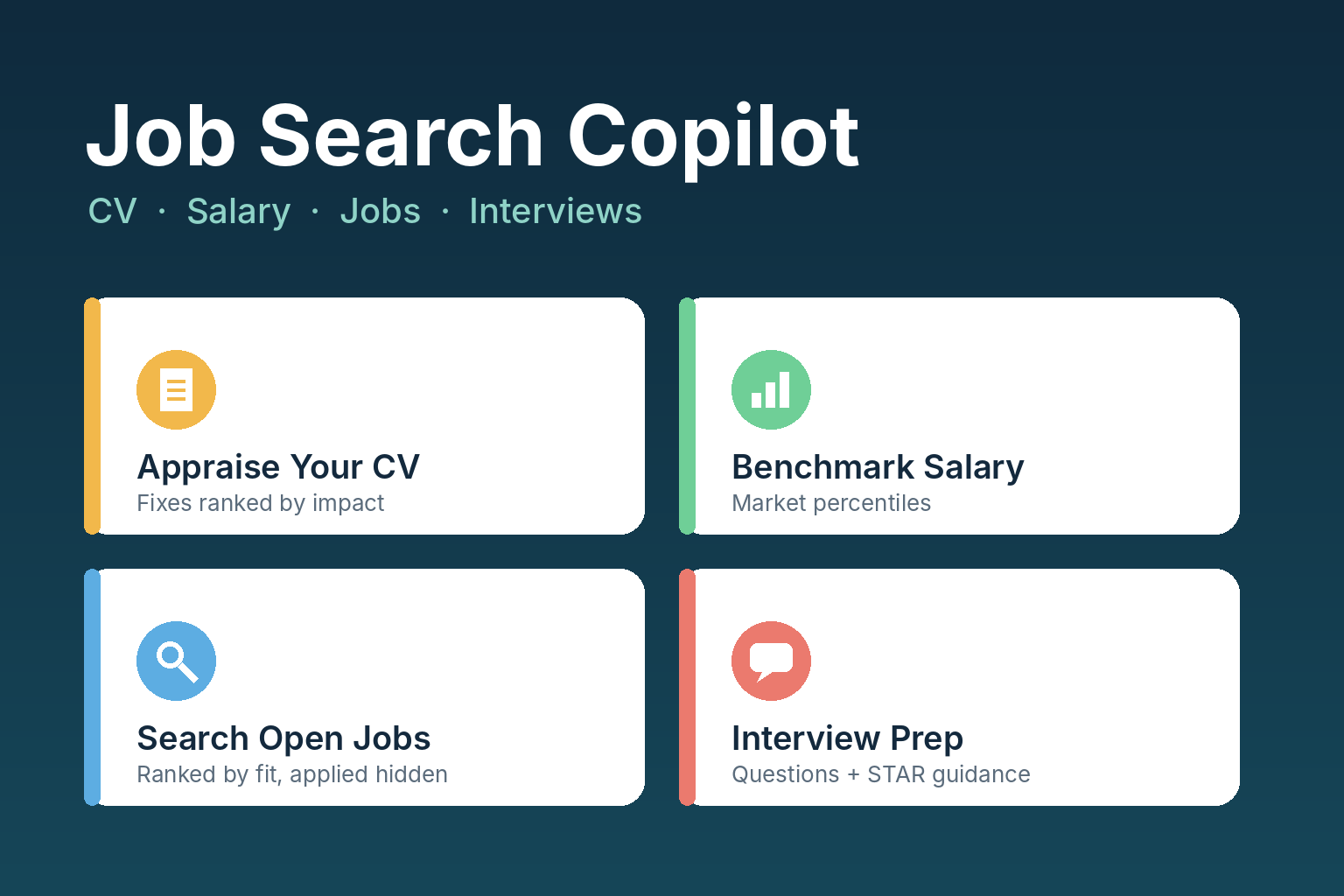
Job Search Copilot: Appraise Your CV, Benchmark Your Salary, Find Jobs & Prep Interviews
Four tools in one career capsule: get an honest CV appraisal against your target role, benchmark your salary against market data and open-role pay ranges, search open jobs ranked by fit (with applied jobs tracked and hidden), and prep for interviews with role-specific questions and answer guidance.

The First-Year Nurse's Playbook for Time, Pressure, and Support
The first year of nursing exposes you to unexpected challenges like overwhelming time pressure, understaffing, and role conflicts that can make shifts feel longer and more stressful. Different realities show how managing administrative duties, developing time-management skills, and relying on support systems can shape your experience and help you decide how to adapt and thrive in this demanding role. Understanding these realities reveals the unseen struggles and concrete facts that prepare you for what lies ahead.

An Aspiring Agent's Guide to Real Estate Income and Costs
Becoming a real estate agent means facing unpredictable income with bills that don’t stop coming. These realities differ on how agents manage expenses like desk fees, commission splits, and reinvestment strategies, plus how they handle lead generation and client relationships to survive and thrive. Understanding these hidden financial challenges helps you decide if this career fits your tolerance for risk and planning.

An MBA Decision Guide: Costs, Careers, and Return on Investment
Deciding whether grad school or an MBA is worth the money depends heavily on your personal goals, financial situation, and career plans. Evaluations differ on how to weigh the costs like tuition and lost income against potential salary boosts, career advancement, and market demand. This collection guides you through data-driven analyses, opportunity cost considerations, and financial models to help you determine if the investment aligns with your specific ambitions and timing.