
Création monétaire : origines, banques et contrôle des banques centrales
De sources originales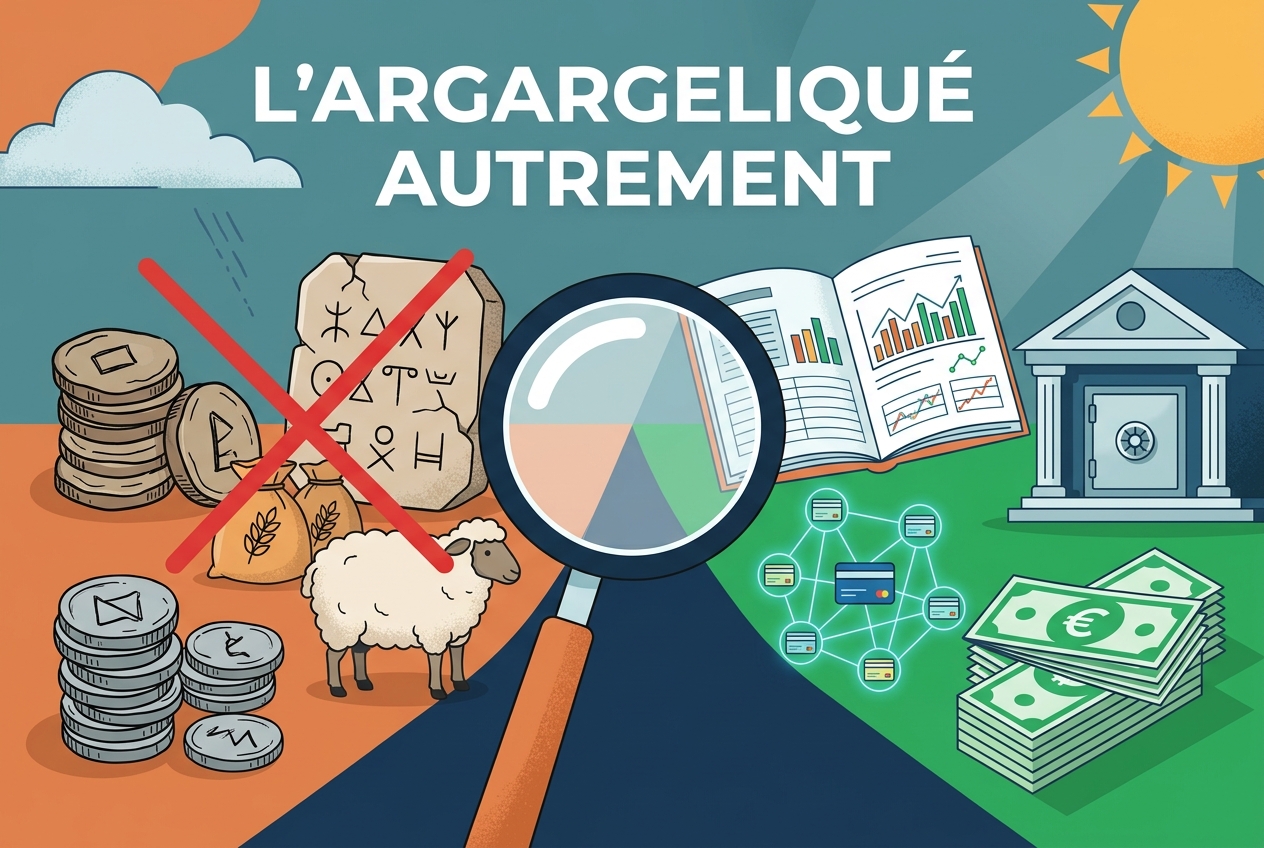
À propos de cette capsule
Une grande partie de ce que l'école enseigne sur la monnaie est contestée à la racine. Ces théories s'opposent sur la question de savoir si la monnaie a commencé comme un troc ou comme une création sociale et politique, si les banques prêtent des dépôts existants ou créent de la nouvelle monnaie lorsqu'elles prêtent, et dans quelle mesure les banques centrales contrôlent réellement l'offre. Démêlez quelle histoire correspond à l'histoire et à l'économie actuelle.
7 théories expliquant comment la monnaie fonctionne vraiment
Démystification de l'origine troc-monétaire
Histoire révisionniste critique des origines de la monnaie.
La monnaie comme construction sociale, pas marchandise.
Perspective de la théorie monétaire moderne sur les finances publiques.
Création monétaire endogène et politique monétaire moderne
Contraintes bancaires et gestion des risques
Démystification du mythe du multiplicateur monétaire.
IA générique vs IA avec cette capsule
Aperçu“Comment fonctionne réellement la monnaie ?”
IA générique
“La monnaie « fonctionne » parce que les gens l'acceptent collectivement comme un moyen fiable d'échanger de la valeur. La monnaie moderne est moins une question de pièces physiques que de confiance, comptabilité, dette et institutions.
1. À quoi sert la monnaie
La monnaie a trois fonctions principales :
-
Moyen d'échange
Vous pouvez échanger de la monnaie contre des biens et services au lieu de troquer. -
Unité de compte
Les prix, salaires, dettes, impôts et profits sont mesurés en monnaie. -
Réserve de valeur
Vous pouvez conserver la monnaie et l'utiliser plus tard, même si l'inflation peut réduire son pouvoir d'achat avec le temps.
La monnaie est précieuse parce que les gens croient que d'autres l'accepteront, et parce que les gouvernements exigent le paiement des impôts en monnaie.
2. Pourquoi la monnaie papier ou numérique a de la valeu...”
Cette capsule
“Le changement caché est le suivant : la monnaie n'est pas principalement un « objet » qui existe déjà et circule. Dans les économies modernes, la plupart de la monnaie est créée lorsque les banques commerciales accordent des prêts et détruite lorsque les prêts sont remboursés. Les banques ne prêtent pas des dépôts préexistants, et elles ne peuvent pas prêter les réserves de la banque centrale aux consommateurs. Les réserves circulent principalement entre banques pour le règlement.
L'ancienne histoire d'origine est aussi inversée : la monnaie n'est pas née de sociétés entières troquant des poulets contre des chaussures jusqu'à ce que les pièces règlent l'inconvénient. Les anthropologues n'ont trouvé aucune économie de troc pure documentée comme étape normale avant la monnaie. Le troc apparaît généralement après l'effondrement ou la rareté de la monnaie — Europe po...”
Création monétaire : origines, banques et contrôle des banques centrales
Capxule Finance
Voir le profil
Similaires dans Finance

Guide de l’héritier pour finaliser la vente d’une maison héritée
Hériter d’une maison ne signifie pas que vous pouvez la vendre immédiatement. Les obstacles juridiques locaux comme la succession, les recherches de titre et la levée des privilèges créent des pièges spécifiques qui peuvent retarder ou bloquer la vente. Comprendre si vous êtes bloqué par une approbation judiciaire, embrouillé dans des litiges de propriété ou confronté à des dettes cachées vous aide à choisir la bonne voie pour faciliter une vente fluide.

Le guide du conducteur sur les coûts d'achat et de location de voiture
Une voiture est l'un des plus gros chèques que vous écrirez jamais, et le prix affiché ne vous dit presque rien sur ce qu'elle coûte réellement. Ces analyses diffèrent selon ce qui influence le total : certaines suivent le coût par mile et les frais de retour de location, d'autres évaluent le risque d'entretien, la valeur de revente ou comment traduire les taux de location en une comparaison équitable avec l'achat. Adaptez les chiffres à vos propres habitudes de conduite et à votre budget, et vous pourrez choisir l'option qui vous fait vraiment économiser de l'argent.

Guide de l'acheteur sur les contrats de multipropriété et les risques de sortie
Le discours commercial est bref ; le contrat peut vous lier, ainsi que vos héritiers, indéfiniment. Ces tactiques dévoilent le fonctionnement du piège, en distinguant si le cœur du problème est un modèle économique basé sur les frais et les prêts, des clauses contractuelles trompeuses ou des failles juridiques neutralisant les protections des consommateurs. Comprendre ce mécanisme vous indique s'il existe une issue avant même de signer.

Le guide du propriétaire automobile pour contester les indemnisations d'assurance
Les propriétaires de voitures confrontés à un règlement pour perte totale doivent comprendre comment les assureurs calculent la valeur réelle au comptant, la dépréciation et les prix des véhicules comparables. Apprenez à contester les offres de règlement basses grâce aux clauses d'expertise, aux évaluations indépendantes, aux contre-offres, à la documentation et aux règles spécifiques à chaque État afin de pouvoir obtenir un règlement plus équitable en toute confiance.