
Le Guide du Fermenteur Amateur pour des Cornichons et Breuvages Plus Sûrs
De sources originales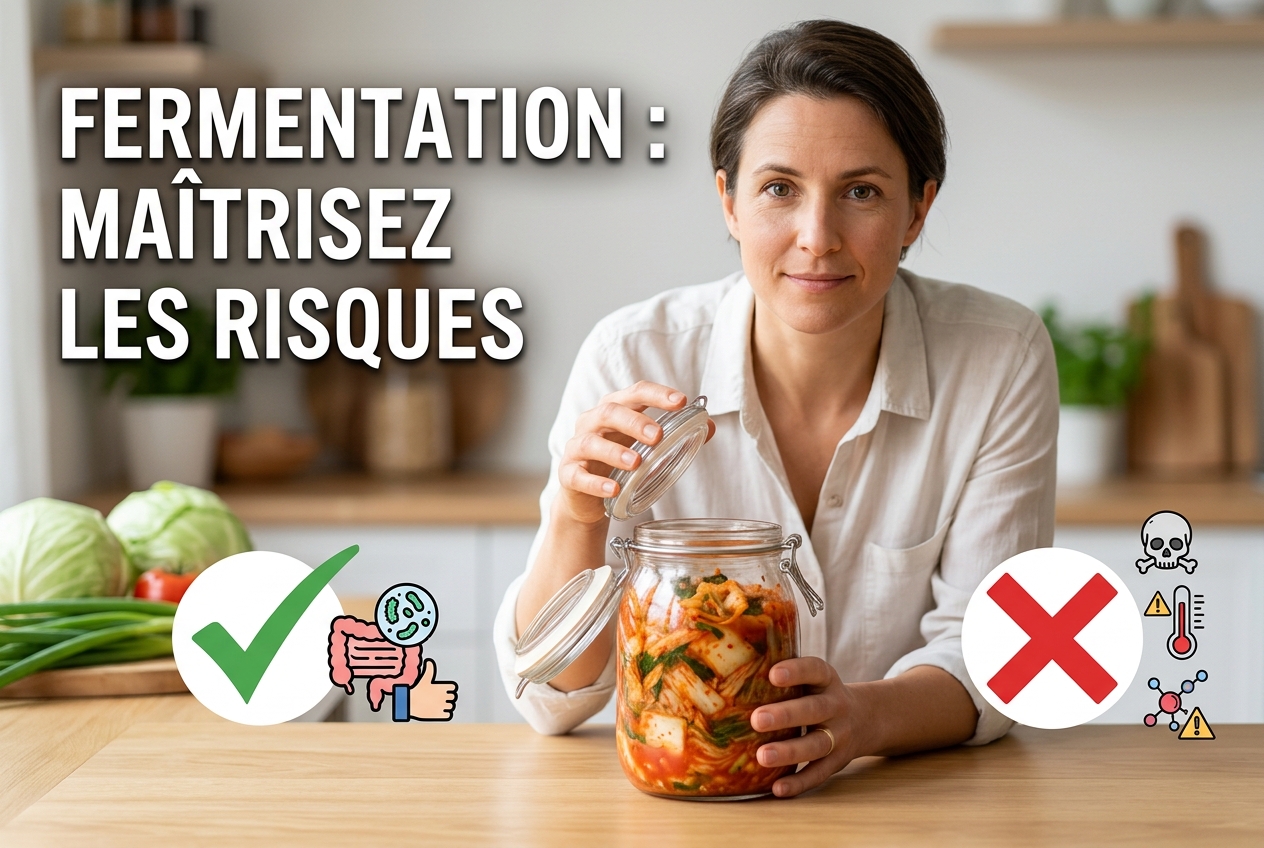
À propos de cette capsule
La fermentation maison promet des cultures vivantes et des bienfaits pour l'intestin, mais mal réalisée, elle comporte de vrais risques, surtout pour les personnes immunodéprimées ou intolérantes à l'histamine. Les approches présentées ici diffèrent selon la rigueur du contrôle des ratios de sel et des techniques, qui devrait éviter la fermentation, et si les lots maison vivants surpassent vraiment les versions industrielles. Apprenez où se trouvent les vrais dangers pour fermenter et mariner en toute confiance.
8 Approches pour la Sécurité et la Santé des Aliments Fermentés
Guide sûr et sain pour la fermentation maison de kombucha.
Guide de fabrication maison de kimchi.
Guide consommateur pour choix sains d’aliments fermentés
Apprentissage de la fermentation maison et partage communautaire.
Risques et précautions pour les aliments fermentés
Bienfaits santé fondés sur des preuves des aliments fermentés
Précision du ratio de sel en lacto-fermentation
Cultures vivantes vs fermentations industrielles
IA générique vs IA avec cette capsule
Aperçu“Que sont les aliments fermentés, et pourquoi les gens en mangent-ils ?”
IA générique
“Les aliments fermentés sont des aliments et boissons produits lorsque des micro-organismes — comme des bactéries, levures ou moisissures — décomposent les sucres et autres composés dans les aliments. Ce processus s’appelle la fermentation.
Exemples courants :
- Yaourt et kéfir
- Choucroute et kimchi
- Pain au levain
- Miso, tempeh et sauce soja
- Cornichons fermentés en saumure
- Kombucha
- Certains fromages
- Bière et vin
Les gens mangent des aliments fermentés pour plusieurs raisons :
-
Saveur
La fermentation peut créer des saveurs acidulées, piquantes, savoureuses ou complexes. -
Conservation
Avant la réfrigération, la fermentation aidait à conserver les aliments plus longtemps en rendant l’environnement moins favorable aux microbes nuisibles. -
Bienfaits digestifs
Certains aliments fermentés contiennent des bactéries bénéfiques vivantes, souvent ap...”
Cette capsule
“Les aliments fermentés sont des aliments transformés par des microbes — bactéries, levures ou moisissures — qui convertissent les sucres et autres composés en acides, alcool, gaz, vitamines, molécules de saveur et composés de conservation. La distinction cruciale cachée : tous les aliments « fermentés » ne procurent pas de bénéfices probiotiques. Si vous voulez des microbes vivants, choisissez des produits bruts, non pasteurisés, réfrigérés et étiquetés « cultures vivantes et actives ». Les cornichons et la choucroute stables à température ambiante sont souvent marinés au vinaigre ou pasteurisés, donc généralement sans cultures vivantes.
Les gens mangent des aliments fermentés pour cinq raisons principales :
- Soutien du microbiote intestinal
De petites portions régulières d’aliments fermentés peuvent augmenter la diversité microbienne intestinale. Une étude de 17 sem...”
Le Guide du Fermenteur Amateur pour des Cornichons et Breuvages Plus Sûrs
Capxule Food & Cuisine
Voir le profil
Similaires dans Alimentation
Huile d'olive extra vierge authentique : bien l'acheter, la déguster et la conserver
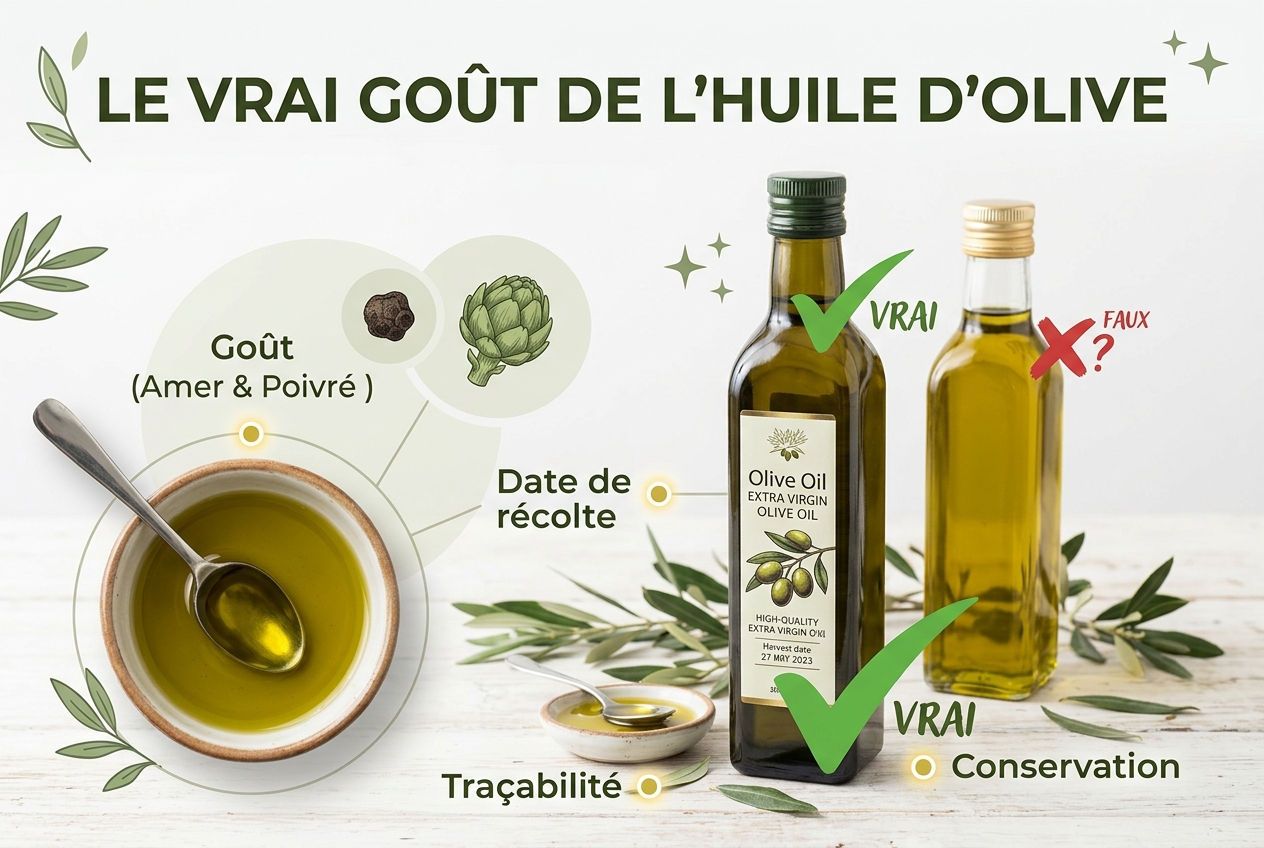
Une grande partie de l'huile d'olive extra vierge en rayon ne correspond pas à ce que promet l'étiquette, et le véritable produit se reconnaît à son amertume et à sa piqûre poivrée. Ces conseils diffèrent selon la manière de démasquer une contrefaçon : certains reposent sur le goût et cette sensation qui chatouille la gorge, d'autres sur les dates de récolte et la traçabilité, et d'autres encore sur les habitudes de conservation qui empêchent une vraie bouteille de devenir rance. Vous saurez ainsi acheter une huile authentique en toute confiance et la garder fraîche chez vous.

Panique autour du MSG : Science, préjugés et sécurité alimentaire
Une seule lettre publiée en 1968 dans une revue médicale a contribué à déclencher cinquante ans de peur autour du MSG. Les opinions divergent quant à savoir si cette panique était une erreur infondée, le produit d’un biais anti-asiatique, ou un avertissement sur de réels risques sanitaires que la science n’a pas encore tranchés. Suivez la diffusion de cette peur et décidez par vous-même ce qui doit figurer dans votre alimentation.

Guide du cuisinier pour les pâtes de curry au mortier et au mixeur
L'outil que vous utilisez modifie la pâte : le pilonnage à la main libère des arômes qu'aucune vitesse de mixeur ne peut égaler, mais le mixeur l'emporte sur la praticité en semaine. Ces méthodes se distinguent par le pilonnage versus le mixage, le frais versus l'acheté en magasin, l'ordre exact des ingrédients versus l'assaisonnement au goût, et la conservation au réfrigérateur brièvement ou la congélation en petites portions. Votre choix dépendra de l'authenticité désirée par minute d'effort.

Guide du brasseur amateur sur l'eau pour le café : minéraux, dureté et pH
L'eau utilisée pour le café influence l'extraction, la clarté des arômes et la longévité de l'équipement grâce à ses minéraux, sa dureté et son pH. Découvrez comment la purification, la reminéralisation, le contrôle du tartre et l'acidité interagissent afin de tester votre eau du robinet et choisir le bon ajustement pour améliorer votre préparation maison.